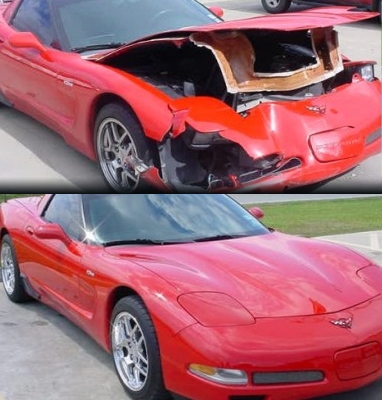
Diminished value refers to the loss in a vehicle’s market value after it has been involved in an accident, even if all repairs are completed properly. In New Hampshire, a vehicle with an accident history is typically worth less than a comparable vehicle that has never been damaged. Buyers often factor prior damage into their purchasing decisions, which directly impacts resale and trade-in value.
In many cases, this loss is not automatically addressed by insurance companies unless the vehicle owner actively pursues a diminished value claim. Understanding how diminished value works in New Hampshire is the first step toward recovering that loss.
Continue Reading To Get Your FREE Claim Review
IS DIMINISHED VALUE RECOVERABLE IN NEW HAMPSHIRE?
In New Hampshire, diminished value may be recoverable when your vehicle is damaged due to another driver’s negligence. Even after repairs, the vehicle’s accident history can reduce its fair market value, which may be compensable as part of a property damage claim.
Insurance companies may argue that repairs restore the vehicle’s value, but market data consistently shows that accident history impacts resale pricing. Vehicles with documented damage often sell for less, regardless of repair quality.
Because diminished value is not always included in standard claim payouts, vehicle owners often need documentation and professional valuation support to justify the loss.
WHAT CAUSES DIMINISHED VALUE?
New Hampshire diminished value typically occurs when a vehicle’s accident history becomes part of its permanent record. Even minor accidents can impact market perception, especially when damage appears on vehicle history reports.
Common contributing factors include:
- Structural or frame damage
- Replacement of major components
- Airbag deployment
- Visible cosmetic repairs
- Vehicle history report disclosures
These factors can reduce buyer confidence and limit resale opportunities, resulting in measurable financial loss.
TYPES OF DIMINISHED VALUE
Diminished value generally falls into three categories:
-
Immediate diminished value – The loss in value immediately after an accident but before repairs are completed.
-
Repair-related diminished value – Occurs when repairs do not fully restore the vehicle to its pre-accident condition.
-
Inherent diminished value – The most common type, reflecting loss in value solely due to the vehicle’s accident history, even after proper repairs.
In New Hampshire, inherent diminished value is often the primary focus of claims, as it reflects real-world market behavior.
HOW IS DIMINISHED VALUE CALCULATED IN NEW HAMPSHIRE?
Diminished value is typically calculated by comparing the vehicle’s pre-accident market value to its post-repair market value. This process relies on market data, comparable vehicle sales, and vehicle-specific factors.
Insurance carriers may use internal formulas that underestimate actual loss. These methods often fail to account for real market conditions, buyer behavior, and accident stigma.
A proper New Hampshire diminished value calculation considers:
-
Vehicle make, model, and year
-
Mileage and condition
-
Severity and type of damage
-
Repair quality
-
Local market trends
Accurate valuation is critical to supporting a successful claim.
WHY A NEW HAMPSHIRE DIMINISHED VALUE APPRAISAL MATTERS
Insurance companies typically require objective evidence to support a diminished value claim. A professional appraisal provides documented analysis based on accepted valuation methods and market data.
An appraisal helps establish credibility, reduces disputes, and clearly outlines the financial impact of the accident. This documentation can be used during claim negotiations and, if necessary, further dispute resolution.
WHEN YOU MAY HAVE A VALID CLAIM
You may have a valid New Hampshire diminished value claim if your vehicle was damaged by another driver, repairs have been completed, and the vehicle now has an accident history that reduces its market value. Even when repairs are properly done, a vehicle with prior damage often sells for less than a comparable vehicle with no accident history, which may make the loss recoverable.
COMMON INSURANCE COMPANY ARGUMENTS
Insurance companies often argue that repairs restore a vehicle’s full value or that the damage was too minor to result in a measurable loss. In some cases, they may also claim that any reduction in market value is minimal and does not justify additional compensation.
These arguments are commonly directed at the claimant and are based on internal guidelines rather than real-world market data. This approach may not reflect how accident history actually affects resale value in the open market.
Start Your New Hampshire Diminished Value Claim Review Here
New Hampshire Diminished Value Claims
New Hampshire is a diminished value state, which means you may be entitled to the diminished value of your vehicle after an auto accident. It’s important to note that determining the diminished value often requires a professional appraisal value claim to accurately assess the impact of the accident on your vehicle’s worth. The statute of limitation on diminished value claims in New Hampshire is 3 years, and New Hampshire does not have uninsured motorist coverage for diminished value. You can’t submit a New Hampshire diminished value claim if you were the at-fault party in an accident, or if the damage was caused by something other than a collision. You can see if you qualify for a diminished value claim by filling in the claim review form above.
New Hampshire Diminished Value Claim Information
Below is a summary of key New Hampshire diminished value claim details to keep in mind.
New Hampshire Statute Of Limitations: 3 Years
Uninsured Motorist Coverage: NO
Diminished Value For At Fault Party: NO
Understanding these points can help determine whether a diminished value claim may apply.
START YOUR NEW HAMPSHIRE DIMINISHED VALUE CLAIM REVIEW HERE
At CollisionClaims.com, we specialize in diminished value claims nationwide and focus exclusively on identifying and documenting vehicle value loss after accidents. We work independently of insurance companies and rely on market-based data, vehicle history analysis, and accepted valuation methods to determine whether a diminished value loss exists. Our process is designed to help vehicle owners understand the true financial impact of an accident before accepting a settlement. Call 1-866-438-6938 or message us here.